Critical Thinking
Thinking critical about critical thinking!
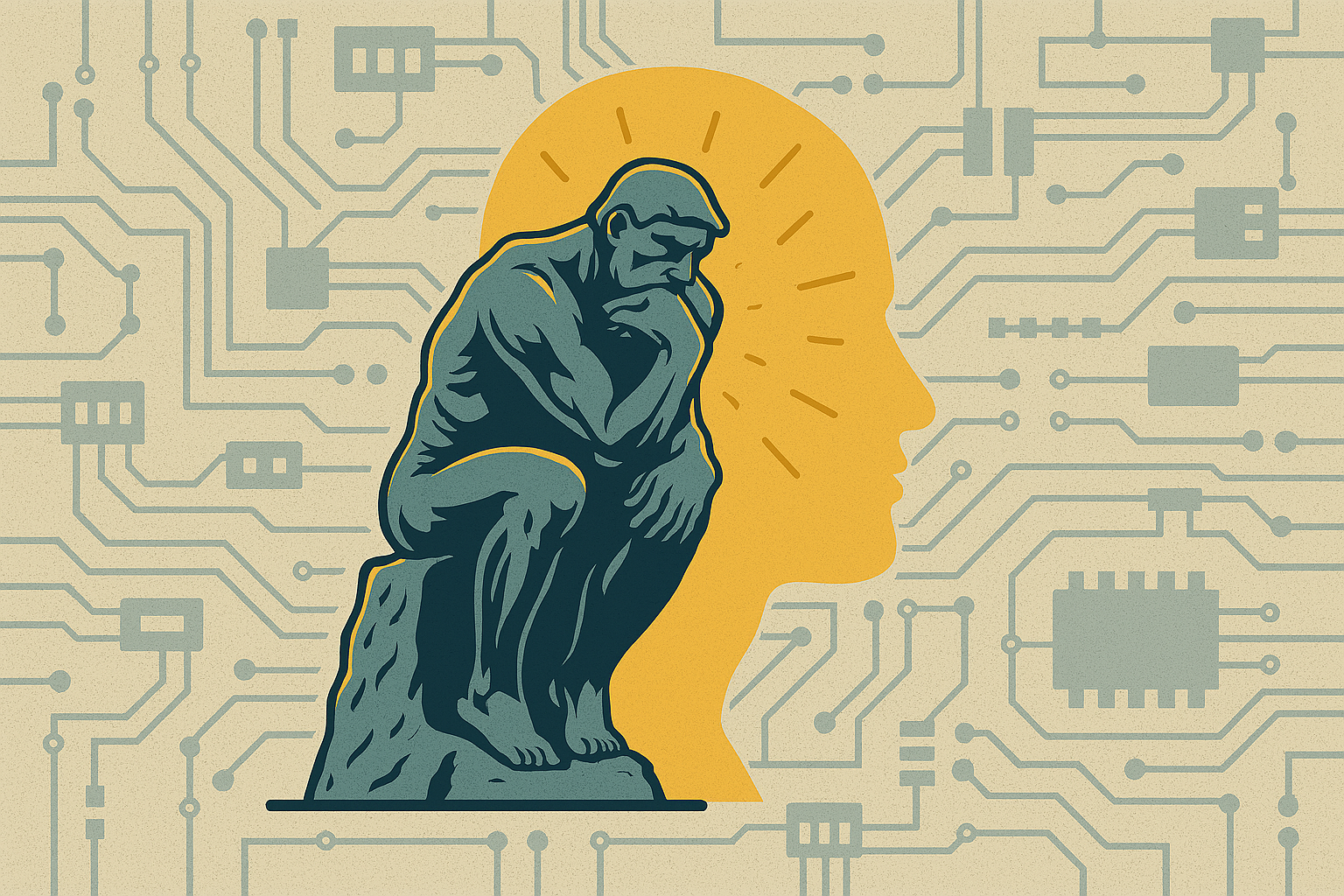
RST defines critical thinking as “thinking with the aim of not getting fooled”, which already tells you that this is not an academic exercise but a survival skill in environments where complexity, ambiguity, and wishful thinking are normal. Software systems are tricky in ways everyday life is not: they hide their behavior behind layers of abstraction, automation, and confident-looking outputs, and that means errors in observation, modeling, and reasoning can persist for a long time without being noticed, until they suddenly matter a lot.
In a time where AI rises, critical thinking matters more then ever because it preserves human agency. As AI makes information faster, cheaper, and more convincing, critical thinking is what ensures that people remain responsible for their beliefs, decisions, and actions, rather than surrendering them to systems that do not understand truth, context, or consequences.
Getting fooled
When people don’t think critically, they tend to get fooled not because they are unintelligent, but because normal human thinking relies on shortcuts, emotions, and social cues.
People often accept information at face value. When new information appears plausible, familiar, or comes from a seemingly credible source, the brain prioritizes understanding and reacting over verifying accuracy. Evaluating truth, switching on critical thinking, requires effort, and without deliberate reflection, people get fooled. This makes people vulnerable to misunderstanding, especially in fast‑moving or emotionally charged contexts.
Cognitive biases quietly distort judgment. Confirmation bias leads people to favor information that aligns with what they already believe while dismissing contradictory evidence. Authority bias makes claims seem more trustworthy when they come from perceived experts or leaders. Repetition also matters: repeated exposure to a claim increases its perceived truthfulness, even when it is false (like the Boehm curve debunked by Laurent Bossavit in his book the Leprechauns of Software Engineering). These biases operate automatically and usually outside conscious awareness.
Also your emotions override critical thinking. Fear, anger, outrage, or hope reduce skepticism and increase persuasion. Emotionally charged messages are processed faster and remembered more easily, which makes them powerful tools for manipulation. When emotional response comes first, careful evaluation often never happens.
People rely heavily on social signals. If many others believe or share something, it feels safer to accept it. Group norms, in‑group loyalty, and echo chambers (or sheep behavior) reinforce beliefs and discourage questioning. Disagreeing can feel risky, socially costly, or exhausting, so flawed ideas persist unchallenged.
Finally, a lack of critical thinking means people confuse confidence with correctness. Overconfidence in one’s understanding reduces curiosity and discourages double‑checking. This makes it easier for misleading narratives to stick and harder for corrections to take hold, even when evidence is strong.
In short, people get fooled when they don’t think critically because their minds default to efficiency over accuracy. Critical thinking slows this process down: it introduces questioning, weighing evidence, comparison, reasoning, sensemaking and reflection.
Why is it important?
Critical thinking is important because it is how people decide what to believe and what to do when information is incomplete, uncertain, or conflicting. Critical thinking helps people avoid oversimplification, become aware of bias, and make better‑grounded judgments in complex situations. Exactly what we need in current AI-dictacted IT.
At a practical level, critical thinking protects us from being misled. Human cognition naturally favors speed, familiarity, and emotional comfort over accuracy. Without deliberate reflection, people accept claims that sound confident, align with prior beliefs, or come from authoritative‑looking sources. Critical thinking interrupts that default mode. It asks: What is the evidence? What is missing? What alternative explanations exist? This ability is essential not only in academic or professional settings, but also in everyday decision‑making, civic participation, and personal judgment.
Critical thinking also helps learning. Instead of repeating information or following procedures blindly, it enables people to understand why something works and when it applies. That makes it a foundational skill!
Critical thinking and AI
With the rise of AI, critical thinking has become even more important, not less. Modern AI systems can produce fluent, confident, and persuasive outputs at massive scale. They generate text, images, and analyses that often look authoritative, even when they are incomplete, biased, or wrong. This increases the risk that people confuse plausibility with correctness and outsource judgment rather than exercising it themselves.
AI also accelerates the spread of misinformation. Studies (see sources below) show that generative systems can amplify misleading narratives by exploiting human cognitive biases and emotional triggers, while making falsehoods harder to distinguish from well‑supported claims. In such an environment, the ability to critically evaluate sources, question outputs, and verify claims becomes a form of cognitive self‑defense.
Another risk introduced by AI is over‑reliance. Research (see sources below) in education and cognitive science indicates that when people trust AI too readily, they are less likely to engage in reflective reasoning themselves. The more confident the system appears, the easier it becomes to skip the effortful work of thinking, leading to weaker judgment, reduced learning, and diminished intellectual independence.
In the age of AI, critical thinking shifts from producing answers to evaluating answers. Humans increasingly act as judges of outputs rather than generators of raw content. This requires stronger, not weaker, skills in skepticism, contextual reasoning, and self‑regulation. Without critical thinking, AI becomes a persuasive authority. With it, AI becomes a powerful but fallible tool that can be questioned, corrected, and used responsibly.
Critical thinking in Software Development
In software projects, we operate in environments that look orderly on the surface but are fundamentally unstable underneath, because software is never just code: it is a living relationship between people, expectations, incentives, deadlines, misunderstandings, technical constraints, and wishful thinking. RST starts from the assumption that uncertainty and time pressure are not exceptions but default, and critical thinking is how testers remain effective when certainty is unavailable and shortcuts are tempting.
Critical thinking, in this context, is not about being clever or argumentative, and it is certainly not about looking for errrors for the sake of it. It is about staying awake when others fall asleep behind process, tooling, or reassuring language.
This is why testers are critical thinkers teams need. The value testers bring is not in executing predefined steps, but in our willingness and ability to question claims, interpret evidence, and explore alternatives when the obvious path looks too smooth to be true. A tester who blindly follows instructions may be busy, a tester who thinks critically adds value because they know that instructions come with assumptions, and those assumptions should be examined first.
WHeReAS heuristic
To make this practical, RST relies heavily on heuristics. The heuristic for critcal thinking is the WHeReAS heuristic. When someone makes a claim about the product, critical thinking invites us to slow down just enough to ask who is making that claim and what might shape their perspective, what the claim actually means, whether it is really true and what evidence supports it, and finally why any of this matters in the first place and who would be affected if the claim turns out to be wrong.
Evidence, in this way of working, becomes more important than confidence. RST does not demand perfect knowledge, because that is unrealistic, but it does demand enough credible evidence to support the decisions being made, and an honest conversation about what “enough” means given the risks of being wrong. In some situations, a quick exploratory check may be sufficient; in others, it would be irresponsible not to dig deeper, even if that takes a lot of time. Critical thinking is what helps testers make that judgment consciously instead of hiding behind process or precedent.
Context-driven
All of this is deeply context‑driven. There is no universal checklist for good thinking, just as there is no universal test strategy that works everywhere. The right questions, the right depth of investigation, and the right form of evidence all depend on the situation, and critical thinking is what allows testers to adapt rather than apply yesterday’s solution to today’s problem.
Critical thinking is fragile. Fatigue, group pressure, overconfidence, tool worship, and blind trust slowly weaken it. This is why RST sees critical thinking as a responsibility you must actively maintain. Critical thinking isn’t somethin you learn from a blogpost. You have to keep doing it, even when it’s uncomfortable.
In the end, critical thinking is not about being negative, slow, or difficult. It is about being honest in complex situations where easy answers are seductive and often wrong.
Sources
Studies:
- Generative AI and misinformation: a scoping review of the role of generative AI in the generation, detection, mitigation, and impact of misinformation
- Can LLM-Generated Misinformation Be Detected?
- Deceptive Reasoning by AI Can Amplify Beliefs in Misinformation
- What psychological factors make people susceptible to believe and act on misinformation?
- Large language models and misinformation
Research:
- Humans and automation: Use, misuse, disuse, abuse
- The Impact of Generative AI on Critical Thinking: Self-Reported Reductions in Cognitive Effort and Confidence Effects From a Survey of Knowledge Workers
- Your Brain on ChatGPT: Accumulation of Cognitive Debt when Using an AI Assistant for Essay Writing Task
- AI Tools in Society: Impacts on Cognitive Offloading and the Future of Critical Thinking